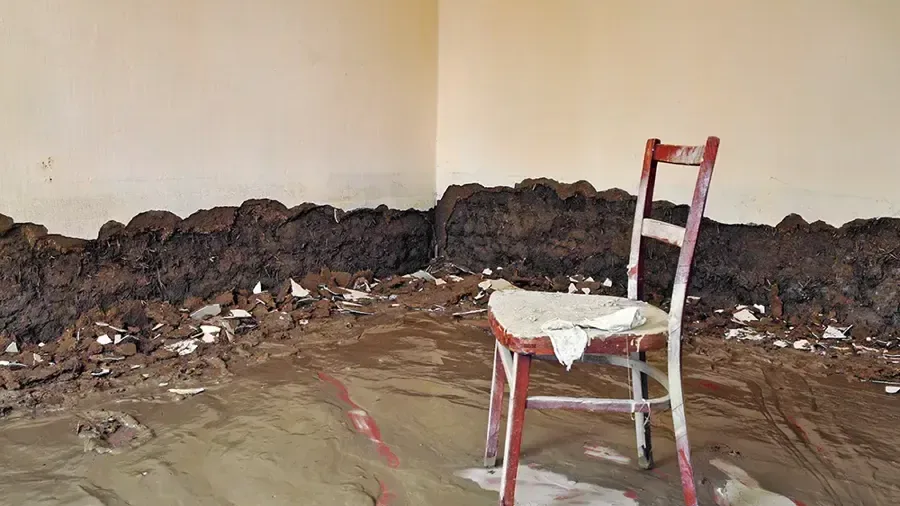
In July 2026, back-to-back nights of storms hit central North Carolina with flash flood warnings and wind gusts up to 60 mph. In Zebulon, North Arendell Avenue closed after a storm knocked power lines and a tree into the road. For homeowners who find water inside after a night like that, the next hours are about safety, evidence and removal.
Key takeaways
- Storm water is treated as contaminated, because it picks up soil, debris and waste on its way in.
- Stay out of rooms with water if power may be on, and have the electricity checked before stepping in.
- Photograph the water mark, damaged items and the entry point before anything is moved.
- Remove standing water early, since porous materials soak up water and keep it.
- Rain in July and August is common, so a plan ready before the next storm saves time.
A real storm night shows the pattern
The July 2026 storms were a good example of how fast a night can change. Flash flood warnings, strong gusts and downed trees arrived together, which means water can enter a home while power and roads are also in trouble.
Zebulon has a warm climate with hot, humid summers, and July and August are the rainiest months. That makes heavy storms a normal part of the season rather than a rare event.
The town sits on an elevated stretch of land between the Little River and Moccasin Creek, but water can still collect in garages, entries and low spots after a heavy downpour.
Why storm water is not clean water
Water that comes from outside has crossed yards, driveways and drains before it reaches the floor. It carries soil, fertilizer, oil and sometimes sewage from overloaded systems.
Because of this, a restoration crew handles it as contaminated water. That affects which materials can be saved and what protective gear the workers use.
Even a thin layer of water matters. It can wick into baseboards and the bottom of drywall, where it is hard to see and slow to dry.
- Carpet and pad soaked by storm water are normally removed.
- Hard floors can be cleaned and disinfected if they are sealed.
- Wet drywall near the floor is cut back above the wet line.
- Stored boxes and soft furnishings that sat in the water are often lost.
Safety and evidence in the first hours
Safety comes first. Water and electricity do not mix, and a flooded outlet or appliance can energize standing water.
Evidence comes second. Insurance adjusters want proof of what the water reached and when.
Make the space safe
If the water is deep, turn off power at the main breaker only if the panel is dry and reachable without stepping in water. Otherwise wait for the utility or an electrician.
- Wear boots and gloves when entering a wet room.
- Keep children and pets out of the area.
- Avoid using fans or appliances plugged in near the water.
Document before moving anything
Take wide and close photos of the water mark on walls and furniture. Note the time the water was found and where it seems to have entered.
What the extraction crew removes first
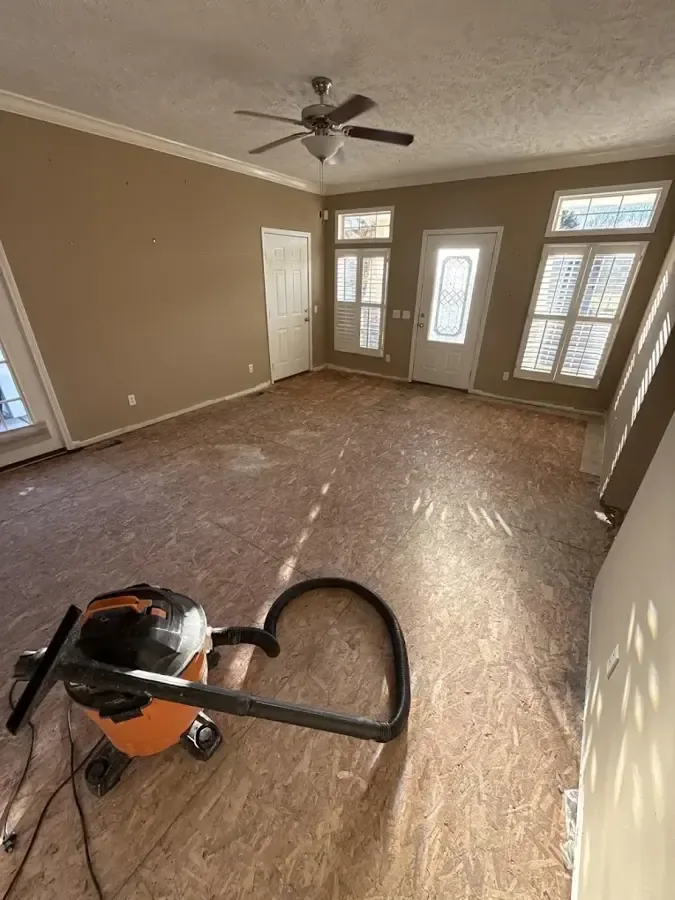
The first job is standing water. Pumps and truck-mounted or portable extraction units pull it from floors before it can wick into walls and cabinets.
Next come the soaked porous items, such as carpet pad, rugs and cardboard. Removing them early reduces odor and the moisture load the drying equipment has to handle.
The storm and flash flood cleanup service page describes the full process, including cleaning and disinfecting surfaces after the water is gone.
Furniture legs, doors and cabinets also wick water. Wood pieces are lifted onto blocks and moved to a dry room so they do not soak up more water while the floor dries.
- Standing water pumped out of rooms and garages.
- Wet carpet, pad and damaged drywall removed.
- Hard surfaces cleaned and treated.
- Air movers and dehumidifiers placed with moisture readings.
Flood information and insurance
Wake County regulates FEMA flood zones and flood hazard soils, and property owners can look up flood information on NC FRIS. That lookup is useful before a storm and again when planning repairs.
Standard homeowner policies treat flood and wind-driven rain differently, so the agent should be asked early which part of the loss falls under which coverage.
Getting ready before the next storm
Storms like the ones in July 2026 arrive with little notice, so a short checklist kept in a drawer saves time. Most items cost almost nothing.
Walk the property after a dry spell and look at where roof water, gutters and driveways send runoff.
Neighbors on the same street often face the same storm, so sharing information about utility outages and road closures helps everyone plan. After the July 2026 storms, a closed road and fallen trees slowed travel for many people.
- Know where the main breaker and the main water valve are.
- Move valuables off floors in garages and low rooms.
- Clear gutters and downspouts before the rainy months of July and August.
- Keep a flashlight, gloves and boots where they can be reached in the dark.
- Save the contact details for the utility, the insurance agent and a restoration company.
Drying after the water is out
Even when no water is visible, wet framing and subfloors hold moisture. In the humid summers there, natural drying is slow, and damp materials can begin to grow mold if they stay wet.
The water extraction crew and the drying team coordinate so the equipment runs until readings show dry. Local owners can also browse the Zebulon storm and flood cleanup page for details specific to the area.
Questions
Is storm water in a house considered contaminated?
Yes. Water that enters from outside carries soil, debris and often waste, so it is handled with protective gear and the affected porous materials are usually removed.
Should I turn off the power during a flood?
Only if the breaker panel is dry and can be reached safely. If not, wait for the utility or an electrician before entering the wet area.
What should I photograph before cleanup?
Photograph the water mark, the damaged items, the entry point and the room overall. Date and time notes help the claim.
How do I check flood information for my property?
Wake County regulates FEMA flood zones, and property owners can look up flood information on NC FRIS.
What should be moved first from a wet room?
Electronics, important papers and small valuables go first, followed by furniture that can be lifted. Heavy items can stay if they are placed on blocks.
Can storm water damage be treated without removing carpet?
Rarely. Carpet and pad that soaked in storm water are usually removed because they hold contamination and are hard to clean.