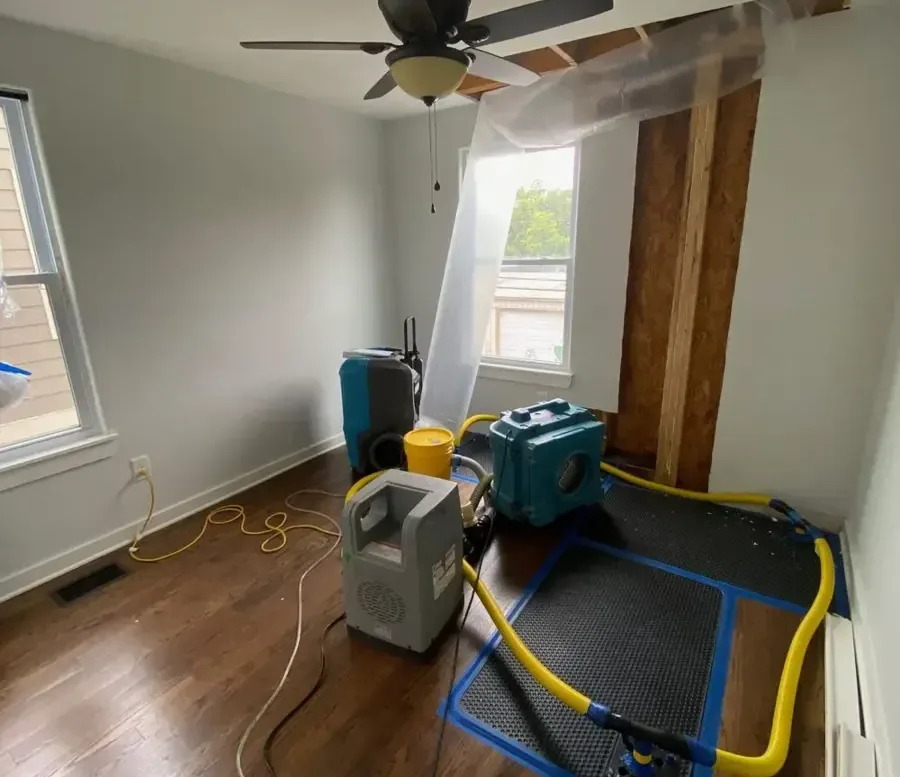
A wall that got wet in January may dry on its own with the heat running. The same wall in a Wendell summer will not, because the air outside is already full of moisture. This article explains why drying slows down in humid weather and how a drying team gets walls and subfloors back to normal.
Key takeaways
- Hot, humid summers with highs in the upper 80s to low 90s F slow natural drying here.
- Opening windows brings in more moisture, so controlled drying equipment does the work instead.
- Moisture readings, not appearance, decide when a wall or subfloor is dry.
- New builds and older homes both need drying, but the materials and the plan differ.
- Wet materials left in place can start growing mold, so drying should begin right after the water is removed.
How drying actually works
Water leaves a wet material by evaporating into the air. The air can only hold so much moisture, so if it is already damp the water leaves slowly.
Drying a building is mostly about managing the air around the wet materials, not only about the wet materials themselves.
Temperature also plays a role. Warm air takes up more water, which is why summer heat helps only when the air is dry as well.
- Evaporation needs air movement across the wet surface.
- The air must stay dry enough to take on more moisture.
- Heat helps, but humidity limits how much water the air accepts.
- Closed spaces such as wall cavities dry the slowest.
Why Wendell summers make it harder
Wendell has a moderate subtropical climate, with hot, humid summers. July and August are the rainiest months, so wet air and wet weather arrive together.
A damp wall in that weather has little chance to dry by itself. Opening windows can even make things worse by letting more humid air in.
Homes that run air conditioning in summer help the process, but the system alone cannot pull water out of framing.
Cooler indoor air also holds less moisture, which is why a dehumidifier paired with the air conditioner works better than either one alone.
The result is a space that feels cool and dry while the equipment pulls water out of the walls and floors.
Rain is common in July and August, so a leak that begins during a storm may be surrounded by damp air for days. That is why the drying team brings its own dry air instead of waiting for better weather.
Homeowners can help by keeping doors and windows shut during the process and by moving belongings out of the drying zone.
The equipment that does the work
A drying team uses three kinds of equipment together. Each one handles a different part of the job.
Dry air from the equipment also protects nearby rooms, because moisture from one wet wall can drift into closets and hallways.
Air movers
Air movers push dry air across wet surfaces and into cavities. They speed up evaporation at the surface of drywall, flooring and framing.
Dehumidifiers
Dehumidifiers pull moisture out of the air so it can keep absorbing more. In humid weather this is the piece that makes drying possible at all.
Moisture meters and logs
Meters read the water content of walls and floors. The team records readings each visit and keeps equipment running until they match the dry reference points.
New homes and older homes dry differently
The town grew quickly through the 2020s. The Census Bureau estimated 16,845 residents on July 1, 2024, and Wendell Falls, a large master-planned community in the southwest, has townhomes and single-family homes.
Older housing is part of the picture too. In 2010, about 40% of the 2,430 housing units had been built before 1980.
Newer homes tend to be tightly built, which can trap moisture inside a wall, while older homes may have different framing and finishes. Either way the structural drying plan starts with readings in every wet area.
Floor coverings matter as well. Laminate, hardwood and carpet each trap water differently, so the plan names each surface before equipment goes in.
Subfloors under sheet flooring can stay wet for a long time because the covering seals the surface. The team may lift a corner or drill small access holes to dry them.
- Tight new walls may need small openings to reach trapped moisture.
- Older flooring may need gentler drying to avoid damage.
- Insulation that stays wet is usually replaced.
What happens if drying is skipped
A wall that feels dry can still hold water in the framing or the bottom plate. That hidden moisture can warp wood, loosen finishes and give mold a place to grow.
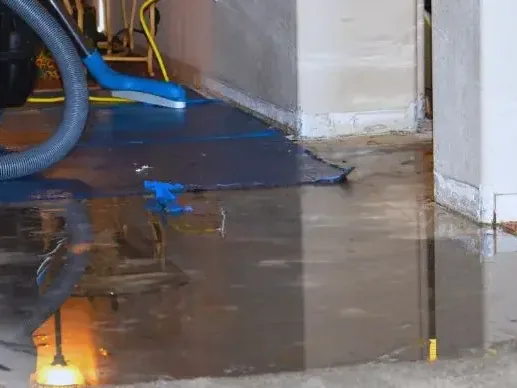
The water extraction step comes first, because pulling out standing water reduces the amount the equipment has to remove.
Insulation is one of the first materials to go. Wet batts sag, hold water against the drywall and rarely dry fully, so replacing them is normally cheaper than leaving them in place.
- Wet insulation is removed and replaced after the cavity dries.
- Baseboards are pulled so air can reach the bottom of the wall.
What a drying job looks like day by day
A typical drying job moves through steady stages, and the schedule depends on the amount of water and the materials involved.
On the first visit the team extracts water, removes materials that cannot dry and places equipment. On later visits they read the meters, move the equipment and adjust the setup.
- Visit one covers extraction, removal and equipment setup.
- Middle visits cover readings, repositioning and checking hidden cavities.
- The last visit confirms dry readings and removes the equipment.
- Repairs begin only after the structure reads dry.
Planning the job
Close the room, keep doors shut and leave the equipment running as directed. Opening and closing the space changes the humidity and slows progress.
Local owners can read more on the structural drying page for the area.
Questions
Can I dry a wet wall by opening windows in summer?
Usually not. Humid outdoor air carries moisture of its own, so dehumidifiers and air movers do a better job.
How do I know a wall is dry?
Moisture readings compared to a dry reference. A wall can look and feel dry while the framing is still wet.
Do new homes dry faster than old homes?
Not necessarily. Tight modern construction can trap moisture in cavities, so the plan may need small openings.
Why does extraction come before drying?
Removing standing water leaves less moisture for the drying equipment to handle, which shortens the job.
Is it normal for drying equipment to run for several days?
Yes. Thick materials and humid weather slow the process, and the team keeps equipment running until readings match dry reference points.
Can I turn the equipment off at night?
It is best to leave it running as set. Stopping it lets moisture rise again and extends the job.
Does a dehumidifier from a store do the same job?
A small household unit helps with damp air, but it cannot match professional units that pull large amounts of water out of materials, so it rarely finishes the job alone.