Structural Drying in Wendell, NC
Hot, humid Wendell summers slow natural drying, so wet walls and subfloors need controlled drying equipment. The drying team sets air movers and dehumidifiers and tracks progress with moisture meters.
(888) 578-4720Wet walls or floors? Call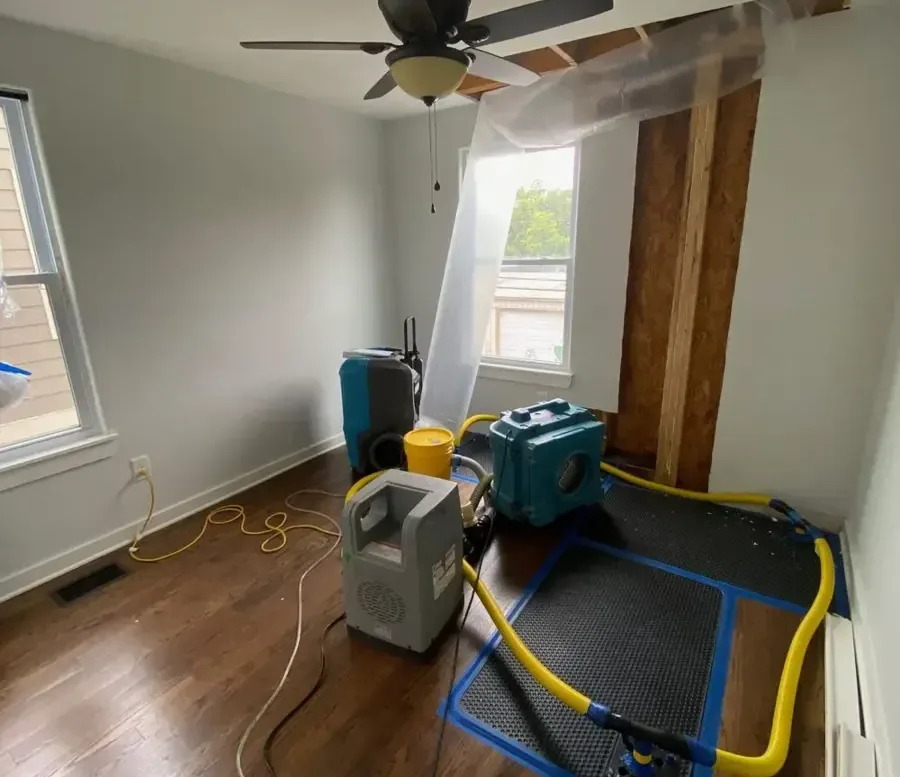
First steps for structural drying and dehumidification in Wendell
Keep the room closed
Shut doors and windows so dehumidifiers can lower the humidity.
Leave equipment running
Do not turn units off, because drying stops when airflow stops.
Keep paths clear
Allow the crew to reach each machine at every visit.
Watch for odors
Report musty smells so hidden damp spots are checked.
Drying is a measured process, not a waiting game. After the standing water is gone, walls, floors and framing still hold moisture, and humid Wendell summers slow evaporation. The drying team places air movers, dehumidifiers and sometimes drying mats, then returns with moisture meters to check each material against a dry standard. Equipment comes off only when the readings say so.
What does structural drying and dehumidification cost in Wendell, NC?
Drying costs depend on the size and the material. One or two rooms often run $1,200 to $3,500, hardwood or several rooms land between $3,500 and $7,000, and a Class 4 loss or whole floor can reach $10,000.
One or two rooms
$1,200 to $3,500
- Air movers placed
- Dehumidifier
- Daily readings
Hardwood or several rooms
$3,500 to $7,000
- Drying mats
- Extra dehumidifiers
- Floor checks
Class 4 or whole floor
$7,000 to $10,000+
- Specialty equipment
- Extended run time
- Full documentation
Ranges are typical, not a quote: category of water, square footage, material class and how fast drying started move the number most. Run the water damage cost calculator for a closer range.
How structural drying and dehumidification is handled in Wendell
The tech who does the walkthrough maps moisture before any equipment goes down, so the drying plan matches what is actually wet. Equipment stays until the readings say dry, not until it looks dry.
- 01
Map the moisture
Meters and cameras mark every wet area and material.
- 02
Place the equipment
Air movers and dehumidifiers are set to suit each room.
- 03
Check each visit
Readings are logged daily and equipment is adjusted.
- 04
Remove equipment
Machines leave once every material reaches the dry standard.
How the drying equipment works
- Air movers push dry air across wet surfaces
- Dehumidifiers pull moisture from the air so it can keep drying
- Drying mats lift water from hardwood floors
- Thermal cameras and meters find damp spots behind surfaces
Closing the room helps the dehumidifiers work, which is why windows stay shut during drying. The main structural drying page explains each tool. Air movers also run low to the floor along walls, because that is where wet baseboards and wall bottoms hold the most water.
Hardwood, drywall and subfloor
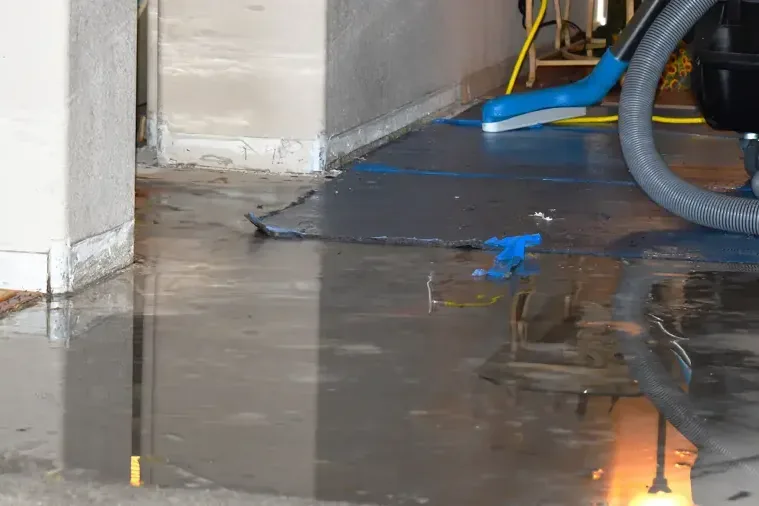
Hardwood can cup or buckle if it dries unevenly, so drying mats and slow airflow protect it. Drywall may dry in place if it stayed clean, while wet subfloor needs patience. Work often follows water extraction, and larger losses add storm flood cleanup.
Proof the job is finished
Daily readings go in a log, and the final entry shows every material at its dry standard. That record helps an adjuster and the homeowner confirm the drying is complete before walls close. Equipment left in place a day too long costs little, but pulling it a day too soon can leave hidden damp spots.
Structural drying and dehumidification across Wendell and nearby communities
The drying team works in homes across Wendell, from Wendell Falls to older houses near downtown. Addresses in 27591 and Lizard Lick are included, and the town hub lists every service. Single story and two story homes are both served.
The same service nearby: structural drying and dehumidification in Knightdale, Zebulon, Archer Lodge.
Related water damage services in Wendell

Structural Drying and Dehumidification questions in Wendell, NC
Still dealing with it?
Walls still wet after the water is gone? The drying team finishes the job.
(888) 578-4720Get the drying plan movingHow long does structural drying take?
Three to five days for most rooms, and longer for hardwood, thick framing or a Class 4 loss.
Why are the machines so loud and warm?
Air movers and dehumidifiers run all day, and the heat they give off speeds drying. They are working as designed.
Can wet drywall always be dried in place?
Clean water on drywall caught fast can dry in place. Sewage or long soaked sheets are removed.
Can the air conditioner run during drying?
Usually it should stay off. The dehumidifiers work best in a closed, warm space.
How do you know the structure is dry?
Meters compare wet areas to dry reference materials. Readings at the dry standard end the job.
What is a Class 4 loss?
A Class 4 loss involves deep moisture in dense materials such as hardwood, plaster or concrete, and needs specialty equipment.
Is mold likely if drying is slow?
Mold can start in 24 to 48 hours in damp, warm conditions, which is why drying begins quickly.
Humid weather slows drying. Meters show what is still wet.
Moisture hides in drywall, framing and subfloor. The drying team sets equipment, takes daily readings and stops only at the dry standard.