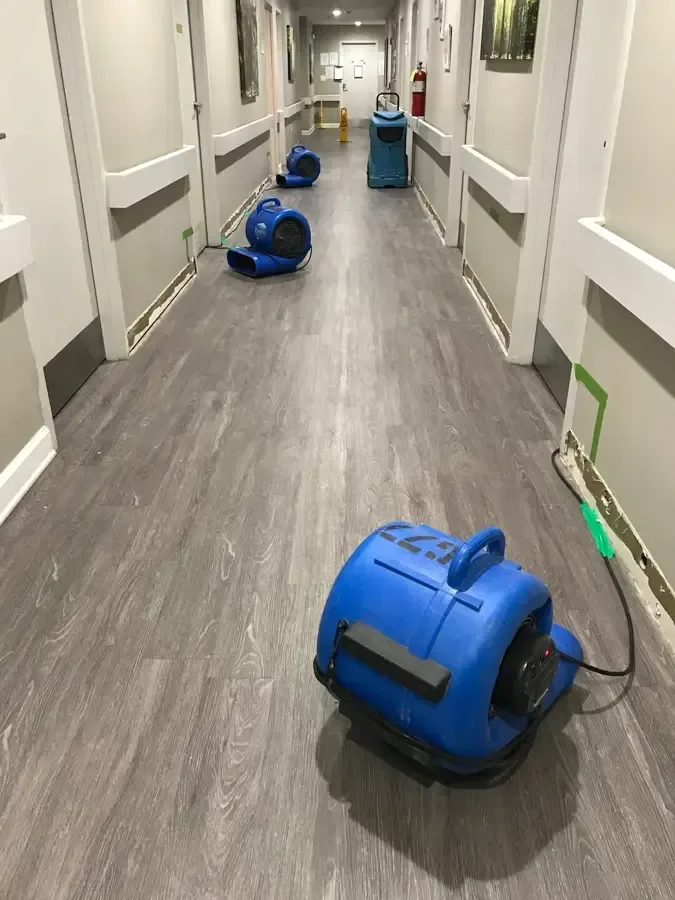
The Neuse River runs through Smithfield west of downtown, and river water is a risk every business owner nearby should understand. During Hurricane Matthew in October 2016, standing water closed U.S. Highway 70 into town and many businesses on East Market Street flooded, according to WRAL. This is a plain day-one plan for an owner who finds water inside a shop.
Key takeaways
- Do not enter a flooded building until the power is confirmed off and the structure looks safe.
- River water is contaminated, so stock, records and flooring that touched it need careful handling.
- Photograph everything before moving it and keep a list of damaged stock for the claim.
- Pull standing water out first, then remove porous materials and dry the floors and walls.
- A fast restart depends on drying the whole space, not only the visible wet area.
Why this risk is real in Smithfield
The Neuse River separates downtown from the neighborhood of West Smithfield, and it is a river that responds to heavy rain far upstream. During Hurricane Matthew a longtime resident told WRAL the Neuse was higher than he had ever seen it, and many roads in Johnston County had to be checked for damage once the water fell.
Market Street, the local name for U.S. Route 70 Business, runs through the center of town. Shops and offices along it share the same exposure to heavy storms, and the town hosts events such as the Ham & Yam Festival and Fall Fridays on Front that bring visitors to the same downtown blocks.
NOAA also lists a river gauge titled Neuse River at Smithfield, with the code SMFN7, which owners can watch when heavy rain is forecast.
Safety before anything else
A flooded commercial space has more hazards than a house. Electrical panels, refrigeration, cash registers and lighting may all be wet.
Do not enter until the power is off and a qualified person has said the space is safe.
Staff safety counts as much as the building. Anyone working in the space should know where the exits are, which areas are closed and who is in charge of the cleanup.
A short written plan on the door keeps visitors and delivery drivers from walking into the wet area.
- Confirm power is off at the main panel from a dry location.
- Watch for slippery floors, loose ceiling tiles and debris.
- Wear boots and gloves, and keep staff and customers out.
- Avoid contact with river water on skin and in eyes.
Protect stock and records
Time matters for paper, fabric and electronics. Anything that can be lifted above the water should be, and anything wet should be separated from dry items.
Back up what can be backed up. Email, invoices and customer lists often live on computers that may have been in the water, and a cloud copy can keep the business moving.
Stock and fixtures
Move dry stock to higher shelves or a dry room. Wet stock should be photographed and listed before it is thrown away.
- List each item, its count and its cost if known.
- Keep damaged samples if a claim may need them.
- Set wet cardboard and fabric aside, since they hold water and odor.
Papers and devices
Wet paper records can sometimes be saved by freezing or professional drying. Computers and servers should stay off until they are checked.
What the extraction crew does first
The crew starts by removing standing water with pumps and extraction units. This stops the water from wicking into walls, doors and furniture.
River water is treated as contaminated, so porous materials that touched it, such as carpet, pad and low drywall, are usually removed. Hard flooring is cleaned and disinfected.
The full process is described on the commercial water damage page and the storm and flash flood cleanup page.
Once the room is open, the crew checks door frames, counters and built-in shelving. These pieces trap water inside, and they often decide how long the job runs.
Record each step with photos, since the crew's notes and the owner's photos together make a clear record for the claim.
- Standing water pumped out of the space.
- Wet porous materials removed and bagged.
- Surfaces cleaned and disinfected.
- Air movers and dehumidifiers placed across the space.
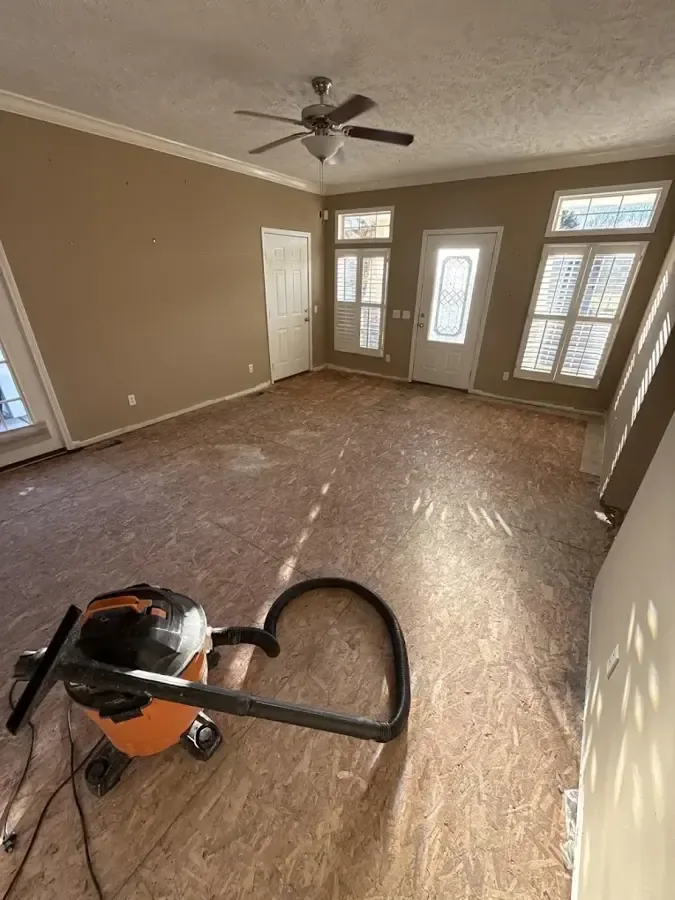
Drying a storefront floor
Commercial floors vary. Sealed concrete dries relatively fast, while wood and some tile systems hold water underneath.
A moisture map tells the team where the wet areas extend.
The goal is to reopen with a dry building, not just a floor that looks clean. Damp materials behind baseboards and under counters can start growing mold if they are left.
Hard flooring under display racks is checked as well. Water slips under shelving bases and counters, where it stays long after the open floor looks dry.
Getting the business open again
Restart planning begins on day one. A shop that has a clear sequence of removal, cleaning, drying and rebuilding can often reopen part of the space sooner than one that waits and sees.
Talk to the landlord, the insurance agent and suppliers early. Each one affects how fast the space can be released for repairs.
- Ask which areas can reopen first once drying passes inspection.
- Tell customers where to find the shop during the closure.
- Keep staff schedules and payroll records for the claim.
- Order replacement stock only after the space is confirmed dry.
- Keep a running log of every cost related to the flood.
Water safety and records after the flood
After Hurricane Matthew, residents with running water were urged to boil it because low pressure in pumps can let bacteria into the system. A business that serves food or drink should check for any similar notice before reopening.
Keep photographs, receipts, staff hours and notes about lost sales. The Smithfield page for commercial water damage explains what local owners should expect, and the water extraction page covers the pumping step.
Questions
Is river flood water treated as contaminated?
Yes. River water carries soil, debris and often waste, so porous materials that soaked in it are normally removed and surfaces are disinfected.
Can a business stay open during cleanup?
Sometimes part of the space can stay open if containment keeps the work area separate. That depends on the amount of damage and the safety of the space.
What records help with a business claim?
Photographs of the damage, a list of lost stock, receipts for the work and notes on days the business could not operate.
Where can I watch the river level?
NOAA lists a gauge titled Neuse River at Smithfield with the code SMFN7.
Should flooded stock be thrown away right away?
Photograph and list it first. Food, paper and fabric that touched river water are usually discarded, while hard goods can sometimes be cleaned.
How long does it take to dry a flooded shop?
It depends on the floor, the walls and how long the water sat. The drying team keeps equipment running until moisture readings show the structure is dry.
Who should be told first after a flood?
Make safety the first priority, then tell the landlord, the insurance agent and the restoration company in that order of urgency.