Slab Leak Water Damage in Zebulon, NC
A pipe leaking beneath a concrete floor soaks flooring from below. The drying team finds the wet area, lifts the damaged finishes and dries the slab in Zebulon homes with controlled, measured equipment.
(888) 578-4720Warm floor, rising bill? Call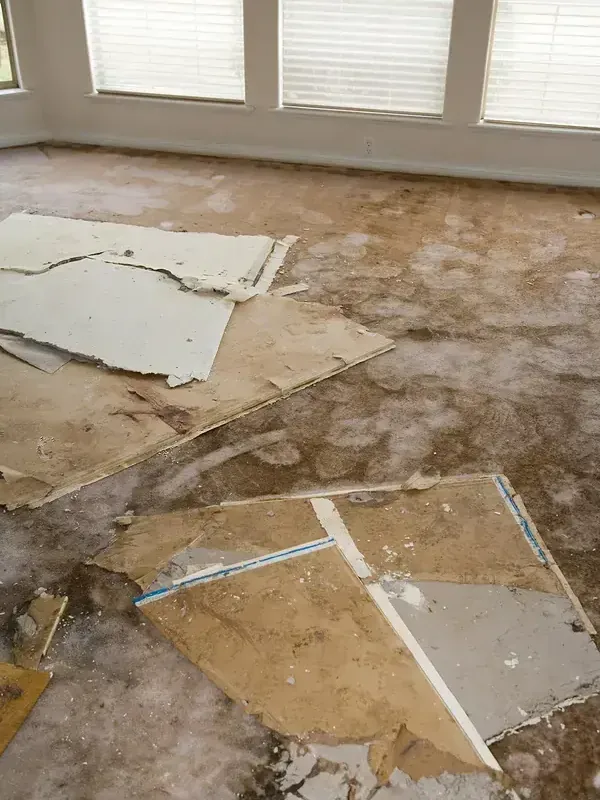
First steps for slab leak water damage in Zebulon
Watch the meter
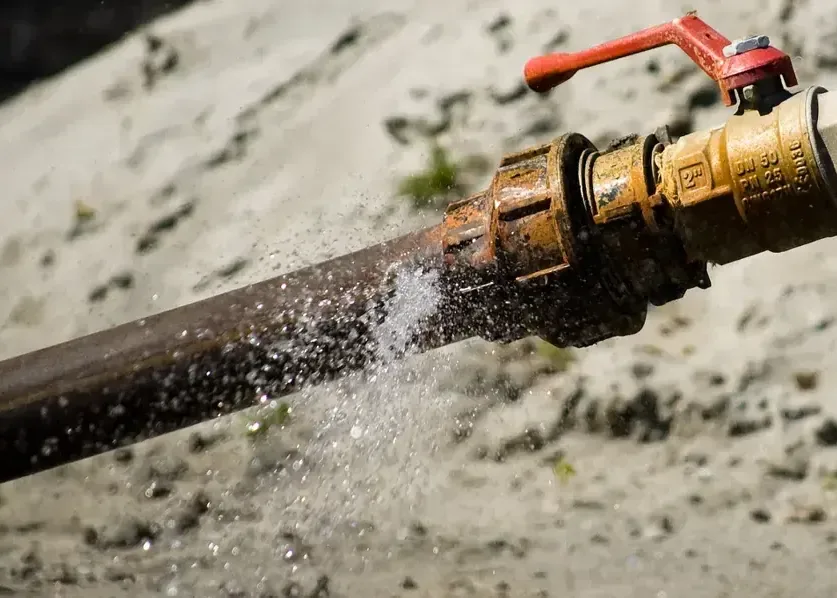
Turn every fixture off and see whether the leak dial still moves on the water meter.
Close the main
If the dial keeps spinning, shut the main valve and call a plumber.
Check the water heater
A hot-side leak may mean closing the heater supply and its power.
Record the floor
Photograph warm spots and damp flooring before anything is lifted or removed.
Not every slab leak announces itself with a puddle. Water that escapes beneath concrete rises through cracks and joints, then lifts tile, swells wood flooring and wets the bottom of walls. Homes built on concrete foundations can face this problem, and the first clues are often a water bill that climbs without explanation or a floor that feels warm underfoot. The restoration team sets aside the repair, which a plumber handles, and focuses on drying what the water reached.
What does slab leak water damage cost in Zebulon, NC?
Slab leak cleanup commonly costs $2,400 to $14,500+, depending on how long the leak ran, how much flooring is involved, whether cabinets or several rooms were affected, and what type of finish covers the slab.
One room, caught early
$2,400 to $5,000
- Flooring removed
- Slab dried
- Moisture logs
Kitchen and next rooms
$5,000 to $9,000
- Cabinet bases opened
- Wall bottoms dried
- Several dehumidifiers
Long-running leak
$9,000 to $14,500+
- Whole-area removal
- Extended drying
- Full documentation
Ranges are typical, not a quote: category of water, square footage, material class and how fast drying started move the number most. Run the water damage cost calculator for a closer range.
How slab leak water damage is handled in Zebulon
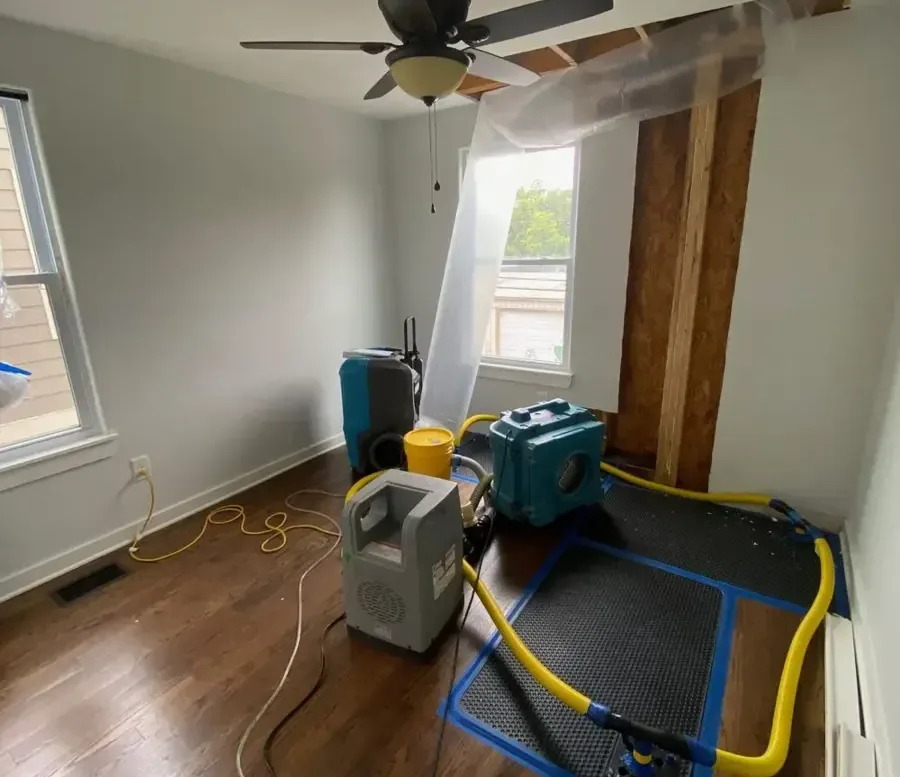
The tech who does the walkthrough maps moisture before any equipment goes down, so the drying plan matches what is actually wet. Equipment stays until the readings say dry, not until it looks dry.
- 01
Find the wet area
Meters and thermal imaging locate moisture in the floor.
- 02
Lift wet finishes
Tile, wood or carpet is removed where it is soaked.
- 03
Dry the slab
Desiccant and air movers lower the slab moisture.
- 04
Confirm and record
Final readings and photos go to the owner.
Signs a slab leak is soaking the floor
- A water meter that keeps turning with every fixture off
- Flooring that feels warm, damp or buckled in one area
- Baseboards stained or swollen along an interior wall
- A musty odor that persists in a closed room
After the leak is located and fixed, the water extraction page covers how any standing water is cleared first.
Why concrete dries slowly
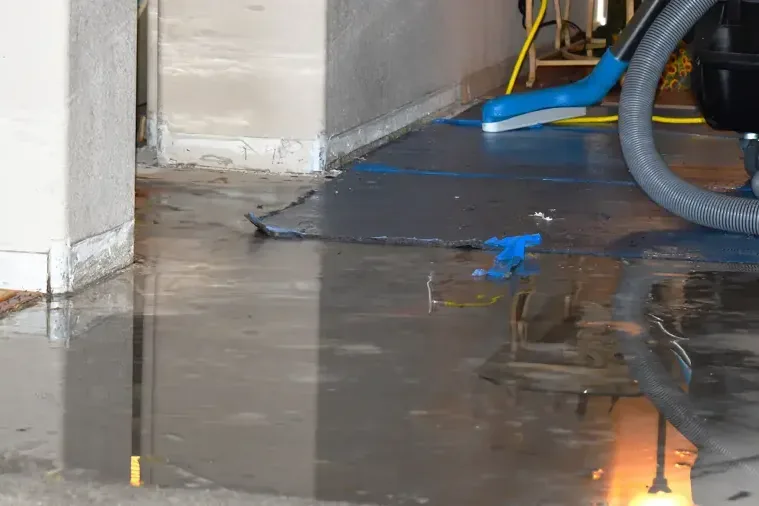
Concrete absorbs water and releases it slowly, so a floor can look dry while the slab still feeds moisture into new flooring. Desiccant dehumidifiers and low-profile air movers pull moisture out of the slab surface, and readings repeat until the concrete reaches the range the flooring maker accepts.
Protecting what stays in place
Careful opening keeps repair costs down. Wet cabinets, wall bottoms and door casings are checked and opened only where meters show moisture. Photos and logs show the path of the leak for the adjuster, while the structural drying work shows how the equipment is scheduled and checked.
Slab leak water damage across Zebulon and nearby communities
Slab leak calls come from homes across town, including newer subdivisions such as Barrington and Riverside, and older neighborhoods like Lakeside Farms, anywhere a concrete floor sits over supply pipes and drains. Each floor plan differs.
The same service nearby: slab leak water damage in Knightdale, Wendell, Archer Lodge.
Related water damage services in Zebulon
Slab Leak Water Damage questions in Zebulon, NC
Still dealing with it?
Damp floor and a spinning meter? The drying team works 24/7.
(888) 578-4720Get the wet floor dried outHow is a slab leak found?
A plumber uses pressure tests or electronic listening tools. The drying team then maps moisture across the floor with meters and thermal imaging. Both steps happen before any flooring is torn up.
Does the slab have to be broken?
Sometimes the pipe is reached through the concrete, though rerouting the pipe is another repair option. That choice belongs to the plumber.
Will hardwood survive a slab leak?
Hardwood cups and buckles when water reaches it from below. Some boards dry and settle, but large soaked areas usually need replacement. Engineered flooring behaves similarly.
Does insurance cover slab leaks?
Policies differ. Some cover the resulting water damage but not the repair under the slab, so a conversation with the adjuster is wise. Keep copies of plumber reports.
How long does the slab take to dry?
Longer than the finishes above it. Readings are repeated each visit, and equipment stays until the concrete reaches an acceptable range.
Can new flooring go down right away?
Not until moisture readings are in range. Installing too early traps water and can ruin the new material.
Water under the concrete? Start the drying plan today.
Water beneath a slab spreads into flooring, cabinets and wall bottoms. The drying team maps it and dries the slab.