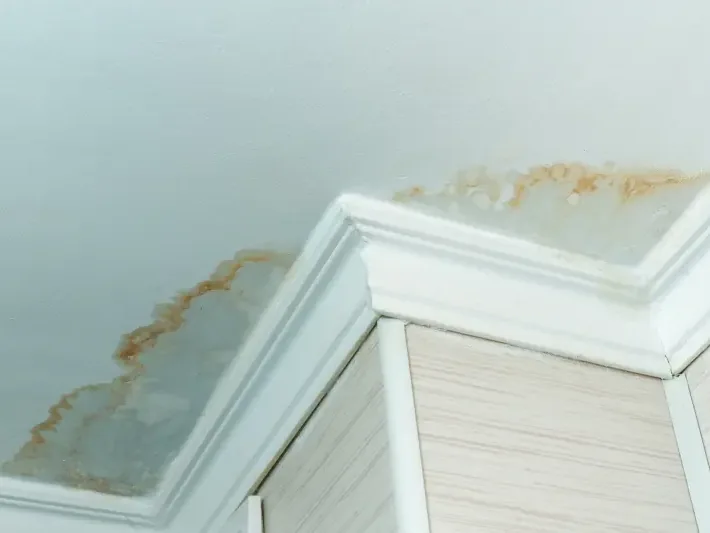
Hot, humid summers bring heavy thunderstorms, and a roof that held up through spring can fail in the first real downpour. When water reaches the ceiling, the order of the first moves decides how much drywall and insulation can be saved. Here is how to handle a storm leak in Wendell, from the first drip to the drying plan.
Key takeaways
- Wendell's rainiest months are July and August, so the biggest roof leak risk comes in the middle of summer.
- A bulging, sagging ceiling holds water and may need a small hole to drain it safely.
- Move furniture, rugs and electronics out of the drip zone and keep lights and fixtures below the stain off.
- Cover the roof opening with a tarp only when conditions are safe, otherwise let a professional do it.
- Insulation and drywall soaked by roof water dry slowly in summer humidity and usually need professional drying.
Why summer storms find weak roof spots
Wendell has a moderate subtropical climate with hot, humid summers and highs in the upper 80s to low 90s F. Roofs bake in that heat all season, and sealant around vents, flashing and shingles can crack or lift before the next storm.
July and August are the rainiest months here. A thunderstorm pushes rain sideways and downward at once, so a spot that stays dry in a light shower can leak badly in a heavy one.
The town also mixes older buildings near downtown with many newer homes in Wendell Falls, and each age of roof has its own weak points.
Heat and sun age shingles quickly, so a roof that looks fine from the street can still have a worn spot above one room.
- Cracked or dried sealant around plumbing vents.
- Lifted or missing shingles after high wind.
- Loose flashing near chimneys, skylights and wall joints.
- Clogged gutters that push water under the roof edge.
What to do when water shows on the ceiling
A brown stain is the end of a long path. Water travels along rafters and insulation before it appears, so the wet area above the ceiling is always larger than the stain.
Act in this order to limit the damage.
Check the attic if it is safe to do so. Wet insulation, dark wood and dripping nails show where the water entered, and the location is useful for the roofer and for the claim.
Relieve a sagging ceiling
A ceiling that bulges is holding water. Place a bucket beneath it, then poke a small hole at the lowest point so the water drains in a controlled way instead of letting the whole section drop.
- Wear eye protection, because insulation and drywall can fall.
- Never stand directly under the bulge.
- Turn off the light fixture and fan on that circuit if water is near them.
Protect belongings
Move furniture and electronics away from the stain, and lift rugs so the floor underneath can dry. Photograph everything before it is moved.
Tarping and temporary roof protection
A tarp stops the next storm from adding to the loss. It should be attached safely and only in dry, calm conditions, because wet shingles are slippery and storms bring lightning.
If the roof cannot be reached safely, the next best step is to limit what the water reaches inside. A professional can set the tarp and also handle the wet attic material.
For the interior side of the problem, the roof leak water damage service page explains how the restoration team approaches it.
- Do not climb onto a wet or steep roof.
- Keep the tarp edges above the leak point so water runs over it.
- Secure the tarp in several places so wind cannot lift it.
How the drying order works
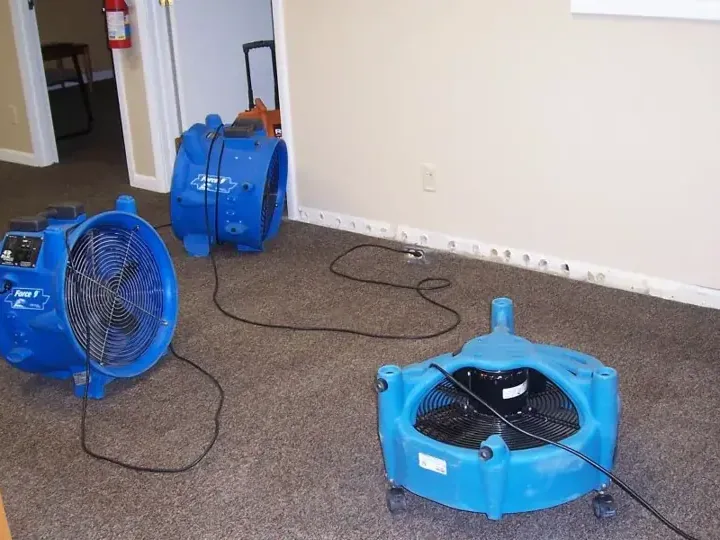
Roof water has three stages of cleanup. First the standing water and soaked insulation come out, then the drywall that cannot dry is cut away, then the framing is dried with air movers and dehumidifiers.
The ceiling leak water damage work often includes replacing insulation, since wet insulation loses its value and holds water against the ceiling.
- Extraction of any pooled water on floors.
- Removal of wet insulation and ceiling sections.
- Placement of fans and dehumidifiers with moisture readings.
- Follow-up checks until framing reads dry.
Why humidity changes the plan
Air that already carries moisture dries a wet ceiling slowly. In a Wendell summer the outdoor air cannot help much, so windows are not a reliable way to dry the space.
Controlled drying equipment fixes this by pulling moisture out of the air and the materials. If the work is delayed, mold can begin to grow in damp insulation and drywall, which adds a second job to the first.
What to record for the claim
Roof leaks produce two kinds of loss, the roof itself and the interior damage. Records for both help the claim move smoothly.
Take photos of the stain from several angles, then photos of the roof from the ground if the damage is visible. Note the date and the weather.
- Photos of every wet ceiling, wall and floor area.
- The storm date and a short note about the rain and wind.
- Receipts for tarps, repairs and drying equipment.
- A list of belongings that were moved or damaged.
Records and next steps
Take clear photos of the stain, the roof damage if it is visible and the storm date. Keep notes on what was moved and what was thrown away.
The local Wendell water damage page lists the roof leak services available here, and the water extraction page covers any pooled water that needs pumping out.
Questions
Should I poke a hole in a bulging ceiling?
A small hole at the lowest point lets trapped water drain safely into a bucket, which is usually better than letting the whole panel collapse. Wear eye protection and stay clear of the area below.
How soon should a wet ceiling be dried?
As soon as possible, because humid summer air slows drying and gives mold a chance to start in damp insulation and drywall.
Can I stay in the house after a roof leak?
Usually yes, as long as the wet room is closed off and electrical fixtures near the water are off. Move to another room if the ceiling is sagging.
Does roof water count as clean water?
Roof water usually passes through insulation and building dust, so the cleanup crew often treats it with more care than a simple supply pipe leak.
Who fixes the roof and who dries the house?
A roofer repairs or replaces the roofing material, while the restoration team removes wet material and dries the structure. Both jobs matter, and the drying should not wait for the roof repair to finish.
Can a small stain mean a large leak?
Yes. Water spreads across insulation and along framing before it shows on the ceiling, so a small stain often hides a larger wet area above.