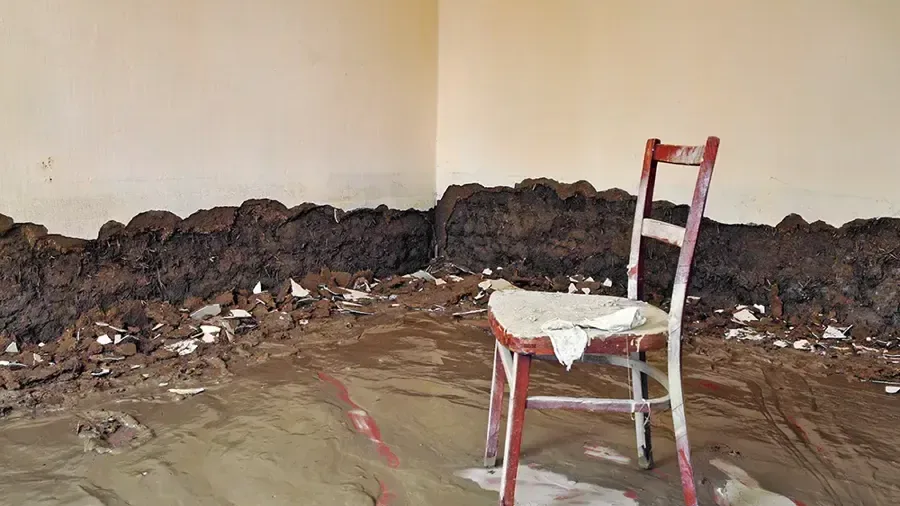
When storm water enters a house, one of the first questions is who pays. In Knightdale the town's own flood damage prevention page states that standard property insurance does not cover flood damage, and that FEMA sets the flood zones. That gap is why careful documentation matters from the first minute.
Key takeaways
- Standard property insurance does not cover flood damage, so a separate flood policy may be the only protection.
- Knightdale is an NFIP participant, and FEMA sets the flood zones that apply to properties.
- July and August are the rainiest months, which is when most storm flooding questions come up.
- Photos, notes and receipts made before cleanup give a claim the strongest record.
- Drying the structure quickly limits secondary damage that may be treated differently from the flood itself.
The gap many homeowners do not know about
Most homeowners assume that a policy covers any water in the house. Standard property insurance covers some water losses, such as a sudden pipe burst, but not flood damage from surface water.
Knightdale participates in the NFIP, and the town points residents to FEMA flood zones when it explains flood damage prevention. A homeowner who is unsure about coverage should ask the agent plainly what the policy treats as flood.
This matters most in the middle of summer, because the climate is humid subtropical and July and August are the rainiest months.
The practical lesson is to ask about coverage before a storm, not after. Questions answered in advance save stress when water is already on the floor.
Where the water comes from in town
The Neuse River corridor lies on the western boundary of Knightdale, and the River District Small Area Plan was adopted in July 2023 for that part of town.
The town has also grown fast, from 11,401 residents in 2010 to 19,435 at the 2020 census. More homes and pavement mean storm water has more places to collect.
Hodge Road and Old Faison Road meet near the Neuse River, a reminder that the river corridor touches everyday routes in town. Drivers and homeowners both feel high water in the same season.
- Heavy summer downpours that overwhelm yards and driveways.
- Water pushed in through doors and garage openings.
- Runoff that finds low spots near foundations.
What to document before cleanup
Good records help with any claim, flood or not. They also help sort out which part of the loss came from storm water and which came from a separate cause, such as a roof leak.
Keep every document in one folder, either on paper or on a phone. When several people are involved, a single folder keeps the story consistent.
Do not forget the exterior. Photos of gutters, grading, window wells and door thresholds show how water reached the house and may matter if a later repair is planned.
A quick sketch of the floor plan with the wet rooms marked also helps the crew and the adjuster talk about the same spaces.
Photos and video
Take wide shots of each room and close shots of the wet marks on walls and furniture. Record a short video walking through the house with the date spoken aloud.
- The water mark on walls and furniture.
- Damaged flooring, appliances and electronics.
- The point where water entered.
- The exterior and yard conditions.
Lists and receipts
List every damaged item with its approximate age and cost. Keep receipts for hotel stays, equipment and cleanup, and write the date and time of every call made about the loss.
Cleanup and safety
Storm water is treated as contaminated, so protective gear is needed and porous materials that soaked in it are usually removed. Standing water is extracted first, then the structure is dried.
The storm and flash flood cleanup page explains the steps in order.
Do not wait for an adjuster before starting the removal of standing water, because delay lets the damage spread. Take photos first, then begin.
Items that cannot be saved should be photographed, listed and then discarded. Keeping a few small samples of ruined flooring or fabric can help if the adjuster asks for proof.
Once the wet materials are out, a drying plan is written so the structure returns to normal before repairs. This record shows an adjuster that the work was thorough.
- Turn off power if it can be done safely.
- Extract standing water.
- Remove wet carpet, pad and low drywall.
- Clean and disinfect hard surfaces.
Why structural drying belongs on the list
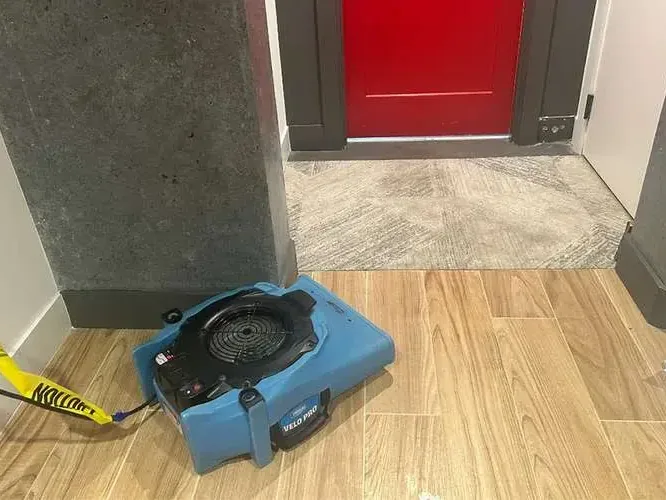
Walls and subfloors hold moisture long after the surface looks dry. If drying stops early, damp framing can lead to mold and swelling that make the claim larger.
The structural drying team uses air movers, dehumidifiers and moisture readings to confirm the structure is dry before repairs start.
Dry readings recorded on each visit become part of the file, which makes it simpler to show the structure was returned to normal.
Questions worth asking the insurance agent
A short list of questions before storm season clears up most confusion. Written answers are better than memory.
These questions apply to any home, whether it sits near the river or well away from it.
Take notes after every conversation. A short summary of who said what and when prevents confusion later.
- Does the policy cover water that comes in through a roof or window opening?
- Is there a separate flood policy, and what does it cover?
- What counts as flood damage and what counts as other water damage?
- Are cleanup and drying costs covered, and how are they documented?
- What deadline applies for reporting a loss?
Where to find more information
The town publishes flood damage prevention information for residents, and FEMA sets the flood zones. For local service details, the service area page lists the nearby towns that receive the same cleanup.
Questions
Does standard homeowner insurance cover flood damage?
No. Standard property insurance does not cover flood damage, so a separate flood policy may be needed. Ask the insurance agent what the policy includes.
Who sets flood zones in Knightdale?
FEMA sets the flood zones, and the town takes part in the NFIP.
Should I take photos before or after cleanup?
Before. Photos taken before anything is moved give the strongest record, then cleanup can begin.
Does drying help a claim?
Yes. Drying limits secondary damage and shows that reasonable steps were taken to protect the home.
What if water came from both a roof leak and the ground?
The two sources may be treated differently. Photograph both entry points and keep notes so the adjuster can separate them.
Should I start cleanup before the adjuster visits?
Remove standing water and wet contents after photographing them. Waiting lets damage spread, and good records protect the claim.
Can the town help with flood information?
The town publishes flood damage prevention information for residents, and FEMA sets the flood zones that apply to properties.
What belongs in a flood loss folder?
Photos, the item list, receipts, notes on every call, the date the water was found and the readings recorded by the drying team.