A backup is one of the few water problems where the first rule is to stay out of the water. Dirty water from a toilet, tub or floor drain carries bacteria, so the first steps are about protecting people, stopping more water and getting the right help moving. This article lays out those steps in order for a Knightdale home.
Key takeaways
- Treat any water that comes up through a drain as contaminated and keep children and pets out of the room.
- Stop using sinks, tubs, toilets and the washer until the blockage is understood, because every flush adds to the spill.
- Report a backup that may involve the public sewer to Raleigh Water, which runs all public water and sewer service in town.
- Porous items such as carpet pad, rugs and low drywall that touched sewage water are usually removed rather than saved.
- Photograph the damage before cleanup starts so the record is complete.
Why sewage water is not treated like a plain leak
Clean water from a broken supply pipe can often be dried in place. Water that comes up through a drain is a different material, because it carries waste and bacteria from the sewer or from the household drain itself.
Restoration crews call this Category 3 water. The label matters because it changes what can be kept, what must be removed and what protective gear the workers wear.
A small spill that looks harmless still soaks into flooring edges, baseboards and the bottom of walls. The surface can look dry while the material underneath stays contaminated.
- Skin contact, splashing and breathing in spray from cleanup all carry risk.
- Carpet and pad that sat in sewage water are normally discarded.
- Hard floors such as tile and sealed concrete can usually be cleaned and disinfected.
- Drywall that wicked the water upward is cut out above the wet line.
What to do right away
The first actions are simple and cost nothing. They protect the household and keep the problem from growing while help is on the way.
If a bathroom floor drain is the entry point, a towel or plastic sheet at the door can keep the spill from reaching hallway carpet.
Protect people and pets first
Keep everyone out of the wet room. Anyone who must walk through it should wear rubber boots and gloves, then wash hands and clothing separately afterward.
- Close the bathroom door to limit foot traffic.
- Open a window if the room has one, and leave the heating and cooling system off so air does not carry odor through the house.
- Do not mix bleach with other cleaners, which creates harmful fumes.
Stop adding water
Do not flush, run the shower or start the dishwasher or washer. Every drain in the house may lead to the same blockage, and each use can push more water into the spill.
If water is still rising, a plumber or Raleigh Water may need to clear the stoppage before cleanup can finish.
Who to report a backup to
Raleigh Water owns and operates all public water and sewer utilities in Knightdale after the merger. A backup that may come from the public main belongs in a report to that utility, and the report also creates a record of when the problem started.
The restoration team does not decide where the blockage sits. A plumber or the utility answers that question, while the cleanup crew handles the water, the contamination and the drying.
A real local example shows why reporting matters. In March 2023 a sewer overflow in Knightdale released about 2,300 gallons of raw sewage, which is a reminder that overflows do happen here and that the public system is not the only source of trouble.
- Note the date, the time and which fixtures backed up first.
- Tell the utility if neighbors have the same problem.
- Keep the name of anyone who is contacted for the file.
How the cleanup is done
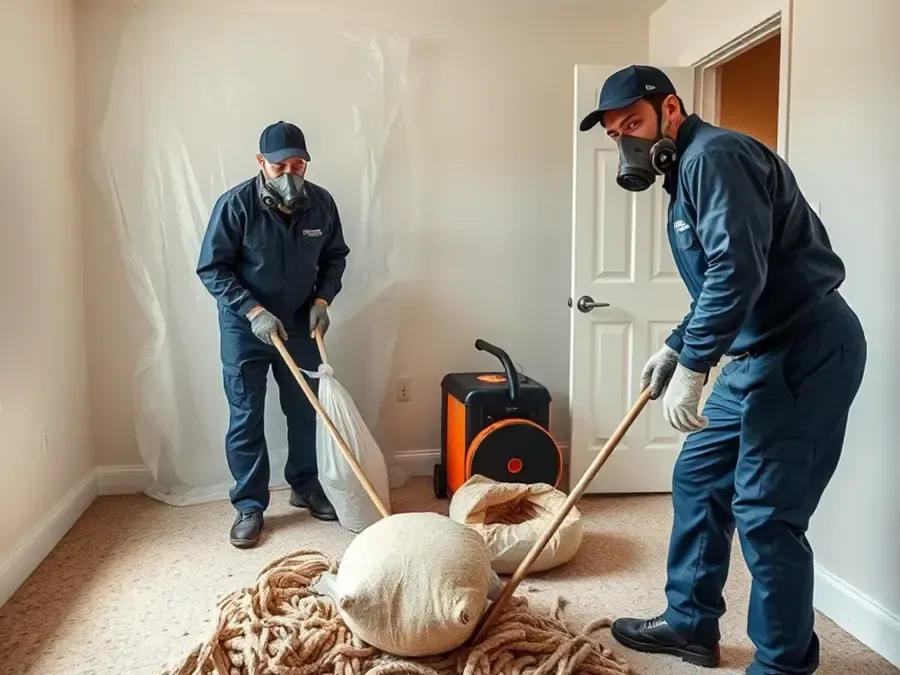
A proper cleanup follows a set order. The crew wears protective equipment, sets up containment so the rest of the house stays clean and then removes the contaminated water and materials.
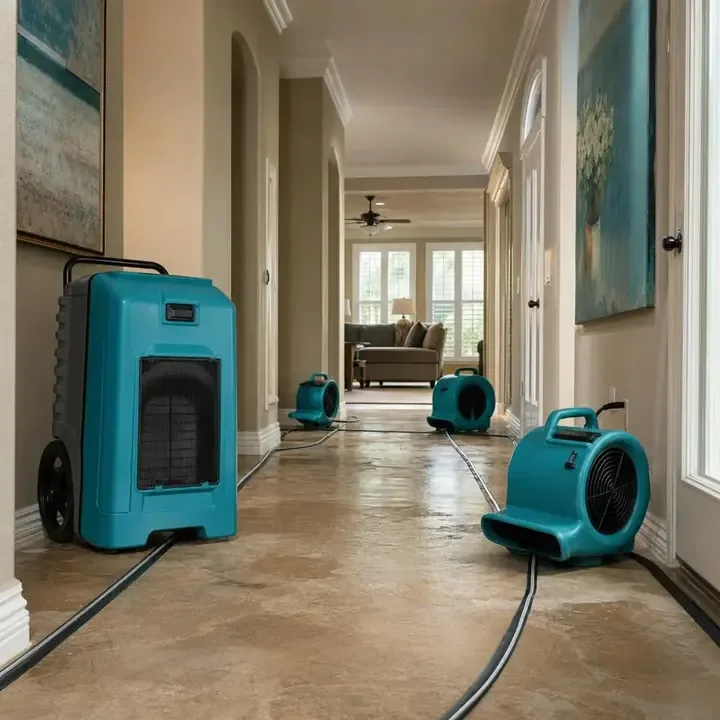
After removal, every hard surface is cleaned and treated with an antimicrobial product, and the affected area is dried with air movers and dehumidifiers. You can read how the full job runs on the sewage backup cleanup service page.
- Standing water is pulled out with pumps and extraction units.
- Wet carpet, pad and damaged drywall are cut out and bagged.
- Floors, baseboards and the lower wall cavity are cleaned and disinfected.
- Drying equipment runs until moisture readings return to normal.
- Odor control is the last step, after the source material is gone.
Old streets and newer subdivisions share the risk
The town has more than one era of housing. Many older homes were built for railroad workers and their families, and the municipal water system has served the town for decades.
Later growth followed the Mingo Creek sewer outfall of the late 1980s, which opened the south side of US 64 and led to subdivisions such as Parkside, Planter's Walk and Mingo Creek. Homes in either part of town need the same careful response when a drain backs up, because the contaminated water behaves the same way in every house.
After cleanup, dry the structure and keep records
Once the sewage water and affected materials are gone, the building still holds moisture in framing and the subfloor. Dry fast, because lingering dampness lets mold start, and mold is a separate and larger problem.
The water extraction crew and drying team work together here, removing leftover water and then drying what remains. Take photos of the damage before work starts and keep the receipts and notes.
The service area page shows the other towns that get the same care.
Questions
Can I clean up sewage water myself?
A very small spill on a hard floor can be handled with gloves, boots and a proper disinfectant. Anything that reached carpet, pad or drywall is better left to a crew with protective gear and the right equipment.
Who should I report a sewer backup to in Knightdale?
Raleigh Water runs the public water and sewer system in town, so a backup that may involve the main should be reported there. A plumber can check the home drain.
Does homeowner insurance cover a sewage backup?
That depends on the policy and whether it includes water backup coverage. Ask the insurance agent before cleanup starts and keep photos and receipts.
Why can drywall not just be dried after a backup?
Sewage water carries contaminants that soak into drywall paper and insulation. Drying removes the water but not the contamination, so the wet section is cut out and replaced.
Is a sewage backup an emergency?
Treat it as one. The water carries bacteria, it keeps spreading into flooring and walls, and the longer it sits the more material has to be removed.