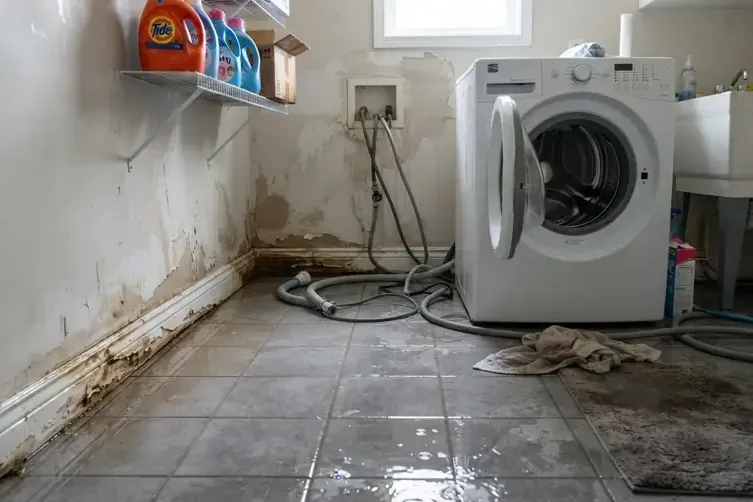
Appliances in a busy household run almost every day, and a worn hose or loose drain can leak for weeks before anyone sees a puddle. In Archer Lodge, about 42.2% of households have children under 18, which means a lot of laundry and a lot of dishes. This article covers the shutoff, the hidden damage and the drying that follows.
Key takeaways
- Turn off the shutoff valve for the appliance first, then the main water valve if the valve will not close.
- Hidden moisture behind cabinets and under flooring is the main risk from a slow appliance leak.
- Rubber hoses and loose clamps are common failure points and are worth checking on a schedule.
- Cabinet bases, toe kicks and subfloors need moisture readings, not just a visual check.
- A leak that has run for a long time may need a drying team, not a mop and towels.
Why appliance leaks go unnoticed
A washer or dishwasher sits against a wall and above a floor, so the water often runs into spaces nobody looks at. A slow drip from a supply hose can soak the cabinet base, the subfloor and the bottom of the wall.
The town counted 1,707 housing units in the 2020 census, and new housing developments are taking shape as the community grows rapidly. Newer homes still have the same hoses, clamps and drain connections as older ones, so leaks are not limited by age.
Family homes add another risk. About 65.1% of households in town are married-couple households, and large loads of laundry and frequent dishwasher cycles put steady stress on hoses and seals.
- Soft or swollen cabinet bases.
- A musty smell near the appliance.
- Floor edges that lift, stain or feel spongy.
- Water bills that rise without a change in use.
Shut off the water and the power
The first move is the shutoff valve behind or beside the appliance. Turn it fully closed, then unplug the machine only if the cord and outlet are dry.
If the valve is stuck or the leak is behind a wall, the main water valve for the house stops the flow. Knowing where it is before an emergency saves time.
Once the water is off, turn off the circuit for the appliance if the outlet is dry, and use towels and a wet vacuum to get surface water up quickly.
Washer leaks
A washer can fail at the supply hoses, the drain hose or the pump. Because it holds a full load of water, a sudden failure can release a lot at once.
Dishwasher leaks
A dishwasher can leak at the door seal, the supply connection or the drain. Water often runs toward the cabinet base and the floor in front of the machine.
Finding hidden water
Visible water is only part of the story. Moisture meters and thermal cameras show where water traveled under the floor and into the cabinets.
A drying team uses these readings to decide what can stay and what must come out. Skipping this step is how hidden moisture ends up causing damage months later.
A thermal camera can show cool, wet areas behind a wall without cutting into it, which helps the team decide where to open the surface.
- Check the cabinet base and toe kick with a flashlight.
- Press on nearby flooring for soft spots.
- Look at the ceiling below if the appliance is upstairs.
- Note any peeling paint or stained baseboards.
Safe drying of cabinets and flooring
Cabinets often can be dried in place. Technicians remove the toe kick, drill small ventilation holes where needed and direct air to the wet cavity.
Laminate and engineered flooring react quickly to water, while tile holds up better but can trap moisture beneath it. A careful look at each material decides the repair plan.
The appliance leak water damage page describes how the restoration team treats these jobs.
Wet drywall behind a dishwasher is cut out in a straight cut above the wet mark so a clean edge remains for repair. Small ventilation holes below the cabinet help air reach hidden corners.
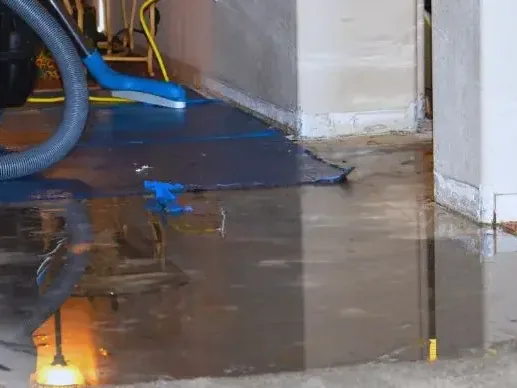
- Standing water extracted first.
- Wet padding and swollen flooring removed.
- Air movers aimed at cabinet bases and wall bottoms.
- Dehumidifiers run until moisture readings fall.
When to bring in the drying team
A small spill wiped up right away may not need help. A leak that ran overnight, soaked flooring or reached the wall base does.
Left wet, damp materials can start growing mold, which makes the job bigger. Local readers can see the Archer Lodge options on the Archer Lodge appliance leak page, and the water extraction page covers pumping out standing water.
What to replace and what to keep
Some parts of a leak-damaged kitchen or laundry room can stay, and some cannot. The decision follows the material and how long it stayed wet.
A drying team measures each surface before recommending removal, which avoids tearing out sound material.
- Solid wood and plywood cabinets can often be dried and kept.
- Particleboard cabinet bases that swell are usually replaced.
- Vinyl and tile can stay if the subfloor beneath dries.
- Baseboards that stain or loosen are removed so the wall cavity can air out.
- Insulation behind a wet wall is replaced when it stays wet.
Preventing the next leak
Replace old rubber hoses with braided ones, check clamps and do not run a washer while the house is empty. A leak sensor on the floor costs little and gives an early warning.
Questions
How do I know if a dishwasher leak went under the floor?
Soft flooring, a musty smell or staining at the edges suggest water traveled under it. A moisture meter confirms it.
Can wet cabinets be saved?
Often yes, if they are dried quickly. Particleboard swells and falls apart when it stays wet, so speed matters.
Where is the shutoff for a washer?
Usually two valves on the wall behind the machine, one for hot and one for cold. The main house valve is the backup.
Should I call a plumber or a restoration team?
Both may be needed. The plumber fixes the hose or connection, and the restoration team handles the water and drying.
How often should appliance hoses be replaced?
Rubber hoses wear with time and heat. Many owners replace them with braided hoses on a regular schedule and check them whenever the appliance is moved.
What if the leak comes from an upstairs laundry room?
Water can travel through the floor into the ceiling below. Both levels need moisture checks, and the ceiling below may need to be opened to dry.
Will insurance pay for a slow appliance leak?
That depends on the policy and on whether the leak was sudden or ongoing. Ask the agent early and keep photos and plumbing receipts.